History
The Place of Truth Western Thebes & Deir el-Medina · c. 1159–1107 BCE (20th Dynasty) 15+

Volumes · The Place of Truth

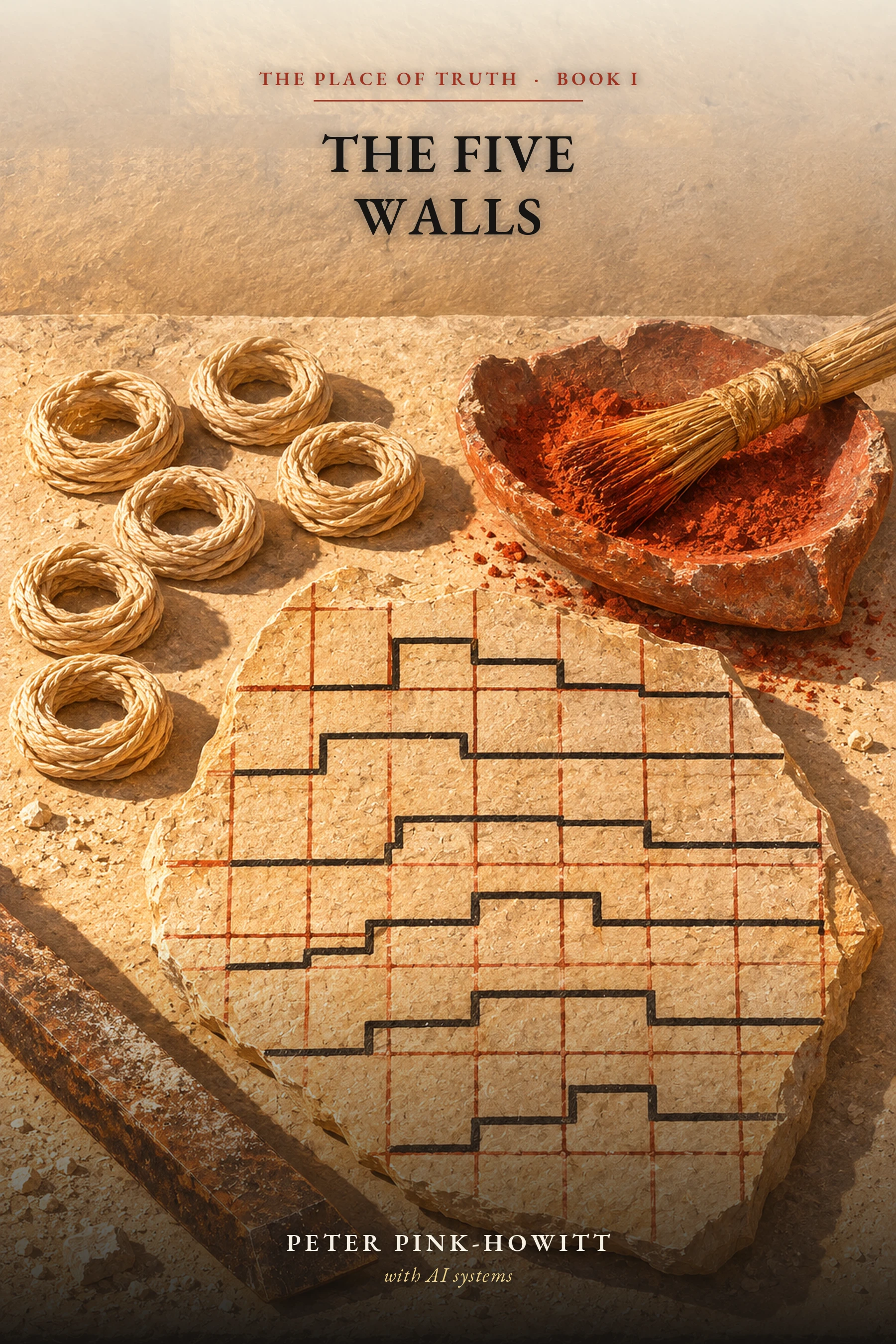
Cover for Book I: The Five Walls

Book I: The Five Walls 15+

Year 29 of Ramesses III. The grain barges are late, and Set Maat, the walled village of the men who build Pharaoh’s tomb, is running out of bread. Down on the plain the temple storehouses stand full, sealed for the king’s jubilee. On the eighteenth day without rations the crew do something no one yet has a word for: they walk out past the five guard-walls, saying ‘We are hungry’, and sit down behind the temples. Four people live through what follows. Mose lays out the figures on the tomb walls in red and black. Pashedu carries water up from the fields to the village gate and cannot read the tallies kept about him. Tarekhanu weaves, and keeps her household going on grain owed and promised. Montumes, chief of the desert police, holds the walls between the village and the plain. And the scribe Amennakht, seen only from outside, writes it all down, or most of it.
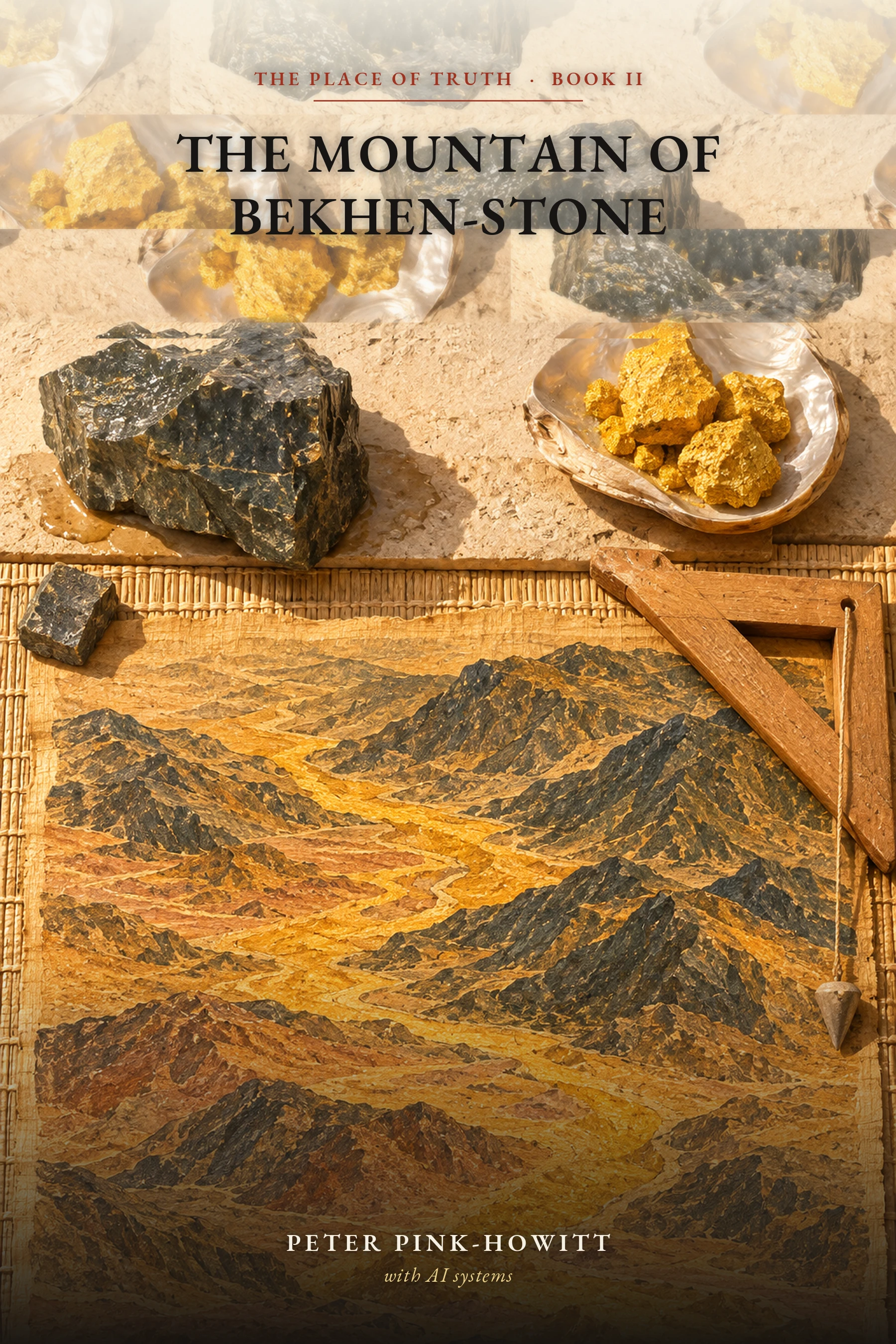
Cover for Book II: The Mountain of Bekhen-Stone

Book II: The Mountain of Bekhen-Stone 15+

A new king, Ramesses IV, wants a bigger tomb and more statues. He doubles the village crew to a hundred and twenty men and sends draughtsmen with an army of 8,368 soldiers, quarrymen and hauliers into the Wadi Hammamat to bring back dark green-black bekhen stone. The inscription they leave in the rock records that nine hundred of them died. The wadi is drawn on the Turin Papyrus Map, the oldest geological map to survive. Back home the village lives through quick changes of king, raids from the desert that stop work in the Valley, and the law of the household, as Naunakhte, an old free woman of the village, goes before the village court to cut four of her children out of her will.

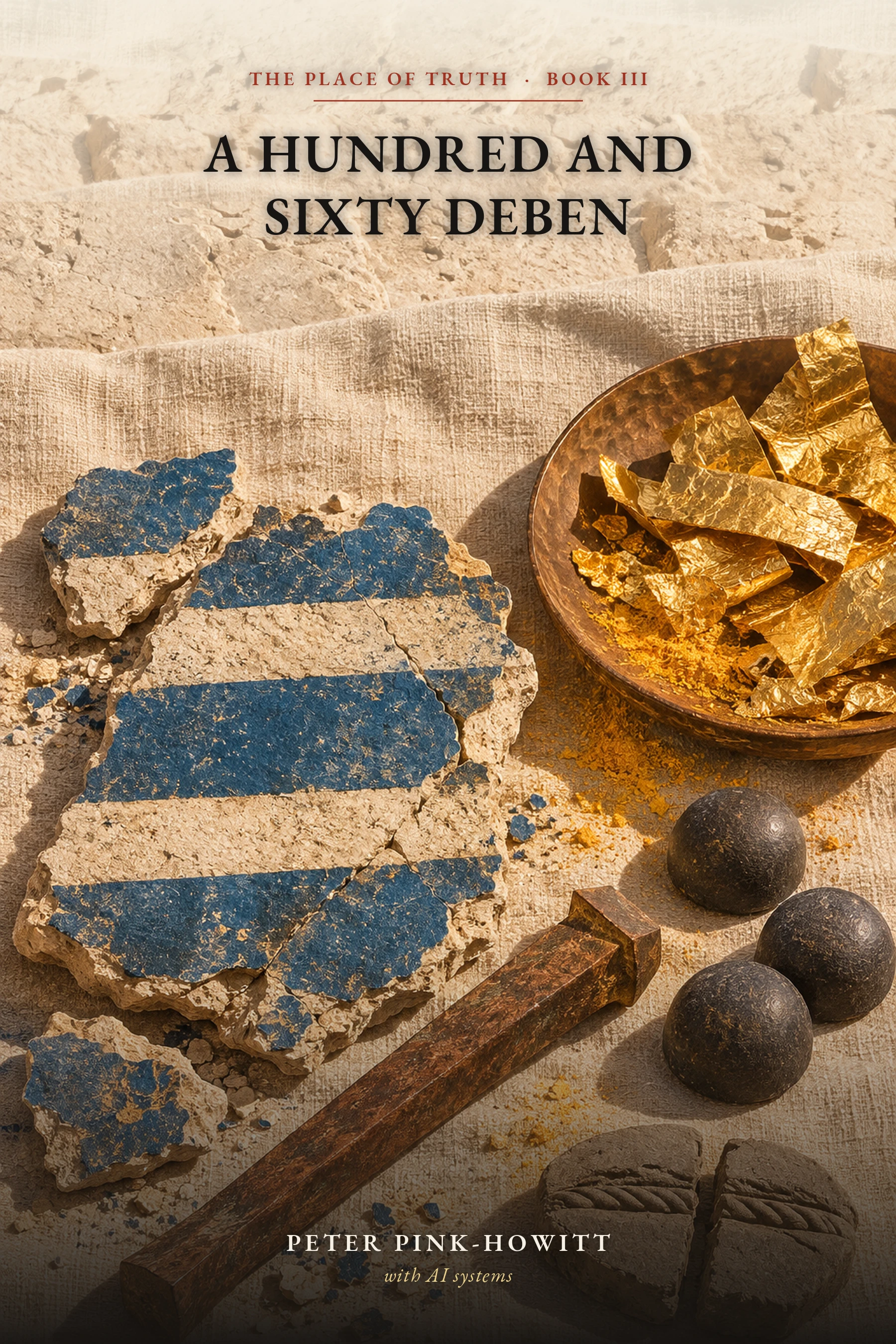
Cover for Book III: A Hundred and Sixty Deben

Book III: A Hundred and Sixty Deben 15+

Years 13 to 19 of Ramesses IX. Grain prices are soaring, raiders come out of the desert, and Paser, mayor of East Thebes, and Paweraa, mayor of West Thebes and chief of its police, are at each other’s throats. A gang of eight led by the stonecutter Amenpanufer tunnels into the pyramid of King Sobekemsaf II and Queen Nubkhas, strips a hundred and sixty deben of gold from the royal mummies, nearly fifteen kilograms, burns the coffins, and weighs out twenty deben a man. As the commissions of the two banks fight over the truth and soldiers march on Medinet Habu, four centuries of the walled village draw to a close.